



TGF-β Receptor
Transforming growth factor beta receptors
TGF-β receptors (Transforming growth factor-β receptors) are single pass serine/threonine kinase receptors. Transforming growth factor beta (TGF-beta) is a member of a large family of pleiotropic cytokines that are involved in many biological processes, including growth control, differentiation, migration, cell survival, adhesion, and specification of developmental fate, in both normal and diseased states. TGF-beta superfamily members signal through a receptor complex comprising a type II and type I receptor, both serine/threonine kinases.
The type I receptors, referred to as activin receptor-like kinases (ALK), lie at the epicenter of the signaling cascade as they transduce TGF-beta signals to intracellular regulators of transcription known as Smad proteins. ALKs possess an extracellular binding domain, a transmembrane domain, a GS domain that serves as the site of activation by type II receptors, and a kinase domain that activates downstream signaling molecules. ALKs mediate the effect of TGF-beta superfamily on a variety of cellular processes such as proliferation, differentiation, apoptosis, adhesion and migration, and therefore play important roles in many biological processes. Some ALKs have been implicated in several disorders, including tumorigenesis and immune diseases, suggesting that these receptors can be used as drug targets.
TGF-β Receptor Isoform Specific Products
-
TGF-β Receptor
(210)
View all products
-
ALK1
(9)
View all products
-
ALK2
(31)
View all products
-
ALK3
(12)
View all products
-
ALK4
(10)
View all products
-
ALK5
(31)
View all products
-
ALK6
(7)
View all products
-
ALK7
(7)
View all products
-
TGFβR2
(6)
View all products
-
ACVR2A
(5)
View all products
-
ACVR2B
(3)
View all products
-
BMP
(1)
View all products
-
GDF15
(12)
View all products
All Product Categories
-
TGF-β Receptor Inhibitors
(235)
View all products
-
TGF-β Receptor Agonists
(10)
View all products
-
TGF-β Receptor Antagonists
(9)
View all products
-
TGF-β Receptor Activators
(21)
View all products
-
TGF-β Receptor Modulators
(2)
View all products
-
TGF-β Receptor Inducer
(1)
View all products
-
TGF-β Receptor Degraders
(2)
View all products
-
TGF-β Receptor Controls
(6)
View all products
-
TGF-beta Receptor Proteins
(22)
View all products
-
ALK-3 Proteins
(4)
View all products
-
ALK-6 Proteins
(3)
View all products
-
BMP Type II Receptor (BMPR2) Proteins
(5)
View all products
-
ALK-2/ACVR1 Proteins
(14)
View all products
-
ALK-4/Activin RIB Proteins
(7)
View all products
-
ALK-7 Proteins
(6)
View all products
-
Activin A Receptor Type 2A (ACTR-IIA) Proteins
(9)
View all products
-
Activin A Receptor Type 2B (ACVR2B) Proteins
(10)
View all products
-
ALK-1/ACVRL1 Proteins
(9)
View all products
-
Anti-Muellerian Hormone Type-2 Receptor (AMHR2) Proteins
(8)
View all products
-
TGF-β Receptor 1 Proteins
(7)
View all products
-
TGF-beta Receptor 2 Proteins
(13)
View all products
-
Type III TGF-β Receptor Proteins
(3)
View all products
-
ALK-3/CD292 Proteins
(4)
View all products
-
TGF-β Receptor Related Products (334)
Related Products (334)

-
Recombinant Proteins (98)
-
Antibodies (16)
-
TGF-β Receptor Isoform Comparison
-
Rubiadin-1-methyl ether
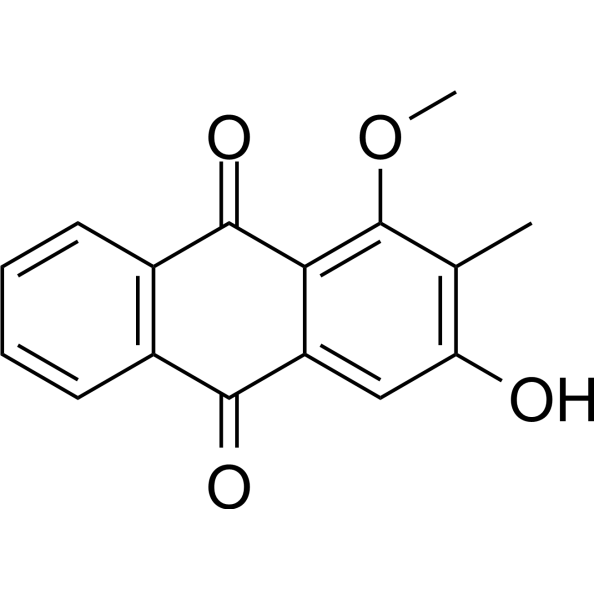 0 ImagesRubiadin-1-methyl ether is an orally potent NF-κB p65 inhibitor and autophagy inhibitor. Rubiadin-1-methyl ether inhibits RANKL-induced phosphorylation and nuclear translocation of p65, suppresses BECN1 transcription, blocks LC3 conversion and autophagosome formation, thereby reducing the levels of BECN1 mRNA and Beclin1 protein. Rubiadin-1-methyl ether inhibits osteoclastogenesis, cell proliferation, macrophage M2 polarization and the TGF-β1 signaling pathway, and effectively alleviates pulmonary inflammation. Rubiadin-1-methyl ether is widely used in research on osteoporosis, pulmonary fibrosis, idiopathic pulmonary fibrosis, acute lung injury and other related diseases.
-
TGFβ-IN-5
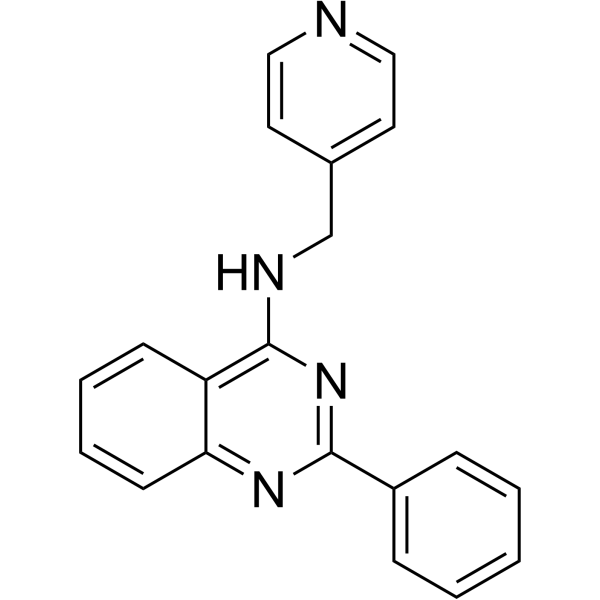 0 ImagesTGFβ-IN-5 is a type I transforming growth factor-β receptor (TGF-β R1) kinase inhibitor with an IC50 value of 0.0485 μM. TGFβ-IN-5 reverses the effect of TGF-β-mediated cell activation on the expression of fibrosis-related genes. TGFβ-IN-5 can be used in the research of fibroproliferative diseases.
-
PRX-08066
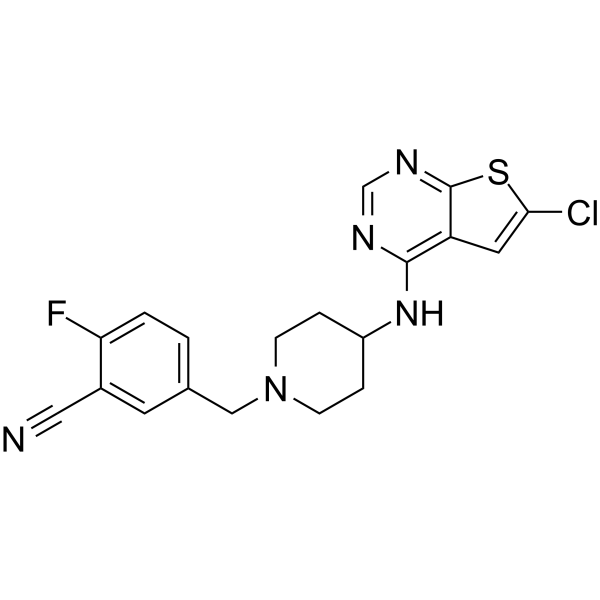 0 ImagesCat. No.: HY-15472CAS No.: 866206-54-4PRX-08066 is a selective and orally active 5-hydroxytryptamine receptor 2B (5-HT2BR) antagonist with a Ki of 3.4 nM. PRX-08066 inhibits the MAPK pathway, 5-HT release and fibrotic factor (TGFβ1, CTGF and FGF2) expression. PRX-08066 inhibits the proliferation of KRJ-I cells and induces apoptosis (caspase-3 activation). PRX-08066 inhibits pulmonary vascular remodeling. PRX-08066 can be used of pulmonary Arterial Hypertension (PAH) and neuroendocrine tumor (NET).
-
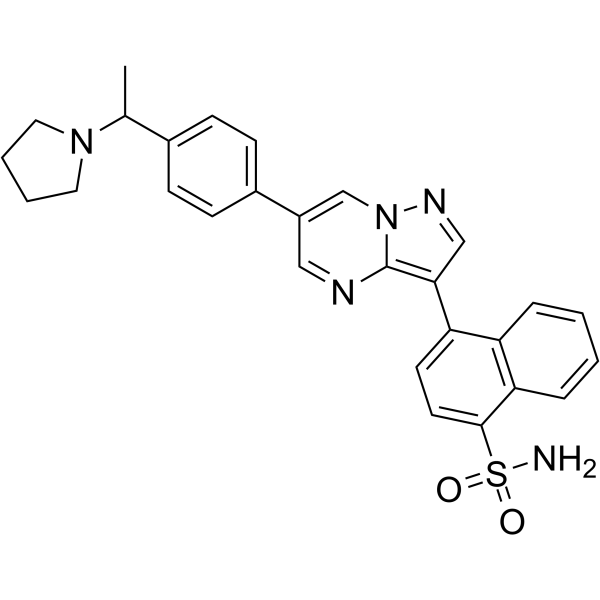
TGFβRI-IN-3
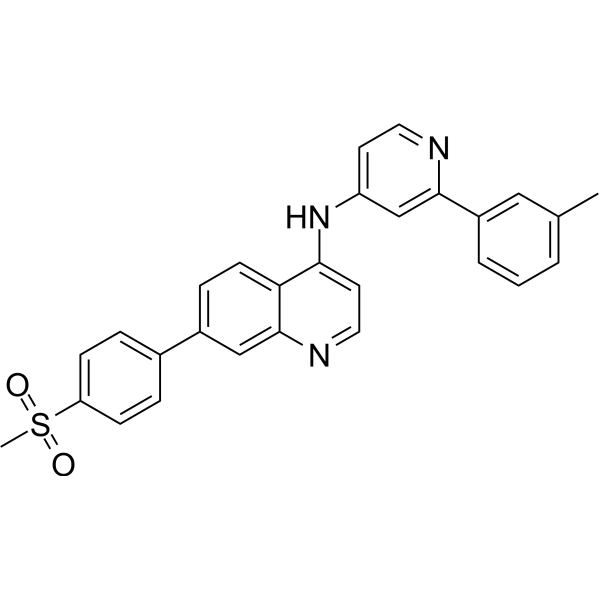 0 ImagesTGFβRI-IN-3 inhibits TGFβR1 at an IC50 of 0.79 nM with 2000-fold selectivity against MAP4K4. TGFβRI-IN-3 represents a highly selective TGFβR1 inhibitor that has potential applications in immuno-oncology.
-
BMS-986260
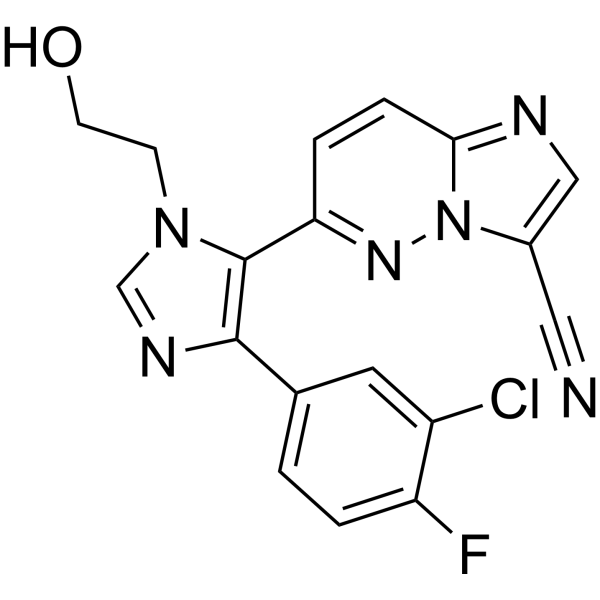 0 ImagesBMS-986260, an immuno-oncology agent, is a potent, selective, and orally active TGFβR1 inhibitor (IC50=1.6 nM). BMS-986260 displays exquisite selectivity for TGFβR1 over its isozyme TGFβR2, as well as in a panel of more than 200 kinases examined. BMS-986260 inhibits TGFβ mediated nuclear translocation of pSMAD2/3 in MINK and NHLF cells lines with an IC50 of 350 nM and 190 nM, respectively.
-
H-Tyr-Ile-Gly-Ser-Arg-NH2
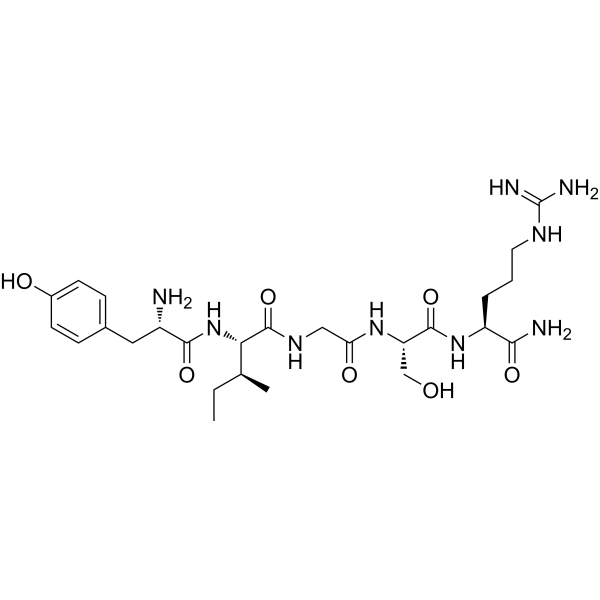 0 ImagesH-Tyr-Ile-Gly-Ser-Arg-NH2 is a hexapeptide that is an essential fragment of laminin responsible for efficient cell adhesion and receptor binding. H-Tyr-Ile-Gly-Ser-Arg-NH2 promotes various epithelial cell adhesion activities.
-
AZ12799734
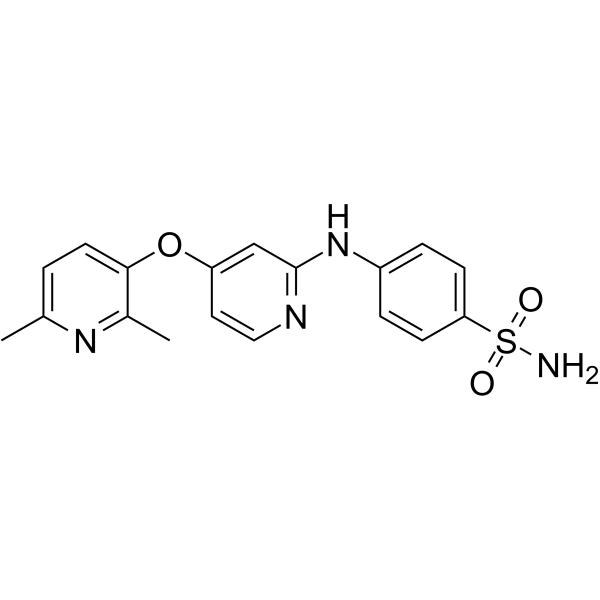 0 ImagesAZ12799734 is a selective, orally active TGFBR1 kinase inhibitor with an IC50 of 47 nM. AZ12799734 is also a pan BMP and TGFβ inhibitor.
-
Meloside A
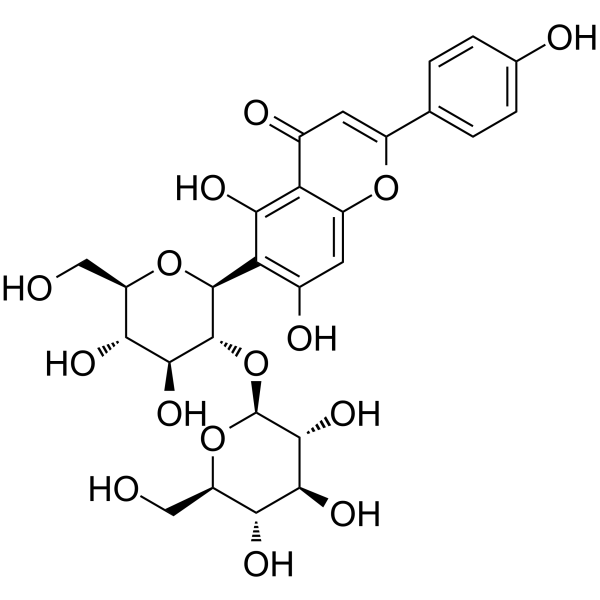 0 ImagesSynonyms: Isovitexin 2''-O-glucoside; Isovitexin 2''-O-β-D-glucosideMeloside A (Isovitexin 2''-O-glucoside) is a flavonoid with antioxidant activity. Meloside A can inhibit cell apoptosis and ROS production. Meloside A can inhibit androgen receptor (AR) nuclear translocation and AR protein expression. Meloside A can reduce IL-6, TGF-β1 and DKK-1 levels. Meloside A can be used for the researches of inflammation and endocrinology, such as hair loss.
-
GFH018
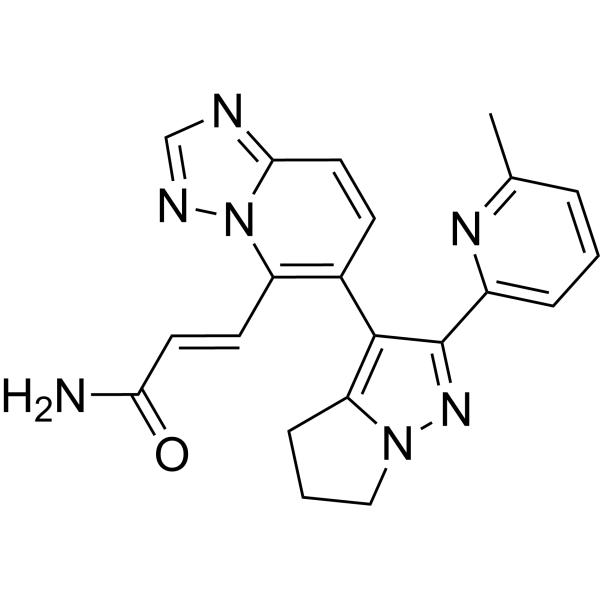 0 ImagesGFH018 is an orally active, selective and ATP-competitive TGF-βR1 inhibitor with an IC50 of 40 nM. GFH018 reactivates the immune system by blocking the immunosuppression mediated by regulatory T cells and M2 macrophages. GFH018 inhibits tumor angiogenesis. GFH018 suppresses tumor growth in mouse tumor models. GFH018 can be used for the research of solid tumors, hepatocellular carcinoma, colorectal cancer, breast cancer, and relapsed/metastatic nasopharyngeal carcinoma.
-
Isosaponarin
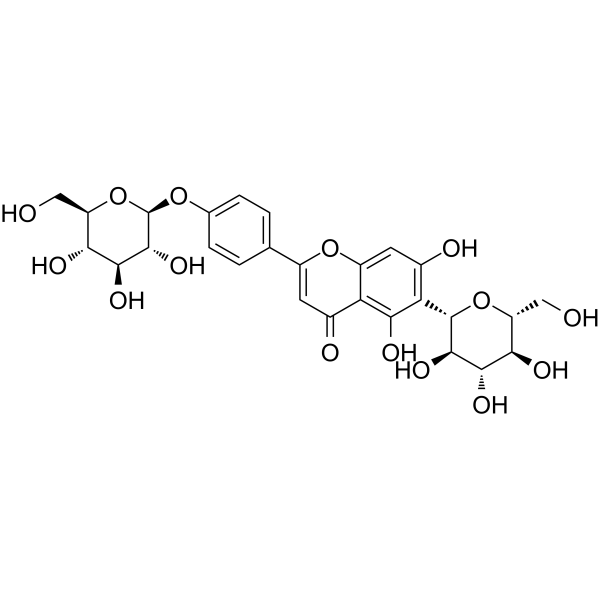 0 ImagesIsosaponarin is a flavone glycoside isolated from wasabi leaves. Isosaponarin is a P4HA2 enzymatic agonist. Isosaponarin increases collagen synthesis via up-regulated TGF-β type II receptor (TβR-II) and prolyl 4-hydroxylase (P4H) proteins production, promoting skin health and wound healing. Isosaponarin-rich plants exhibit strong antimicrobial, antioxidant, anti-hyaluronidase, antiplatelet, anti-atopic dermatitis, and anti-tumor effects.
-
Clonixin
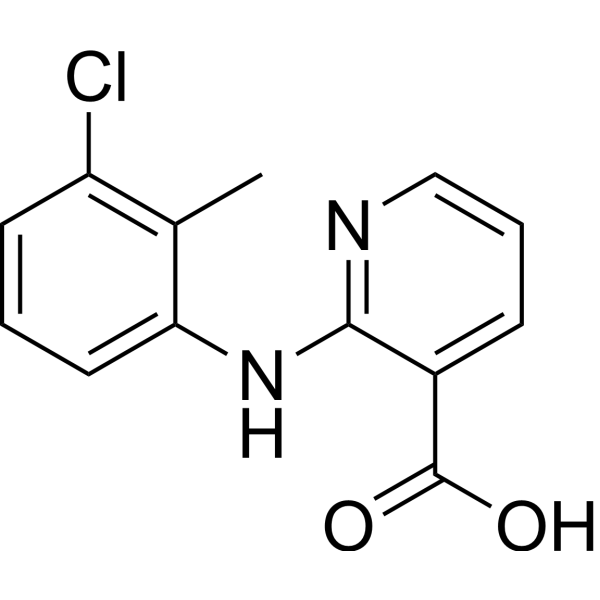 0 ImagesSynonyms: SCH-10304Clonixin (SCH-10304) is an orally active non-steroidal anti-inflammatory agent (NSAID) that inhibits COX synthesis. Clonixin acts as a voltage-gated L-type calcium channel blocker, exerts vasodilatory effects by antagonizing Ca2+ in vascular smooth muscle. Clonixin inhibits TGF-β, reduces lung coefficient, immune cell infiltration level, oxidative stress response, airway resistance, hydroxyproline content and collagen deposition. Clonixin can be used in research related to inflammation such as idiopathic pulmonary fibrosis and moderate to severe pain.
-
SLLK, Control Peptide for TSP1 Inhibitor
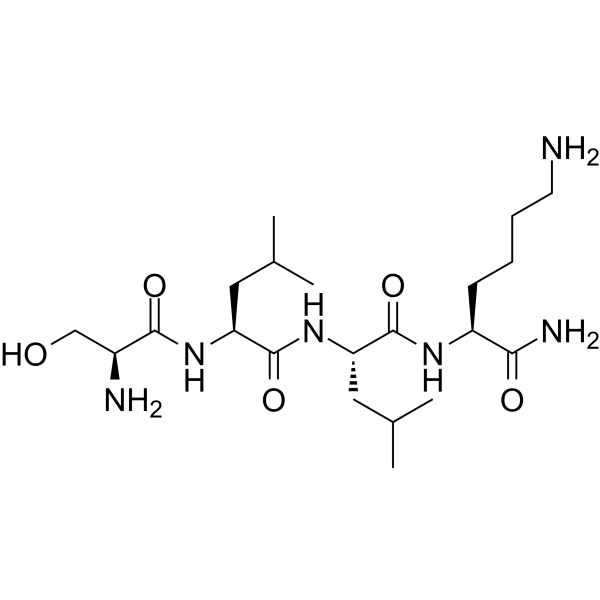 0 ImagesSLLK, Control Peptide for TSP1 Inhibitor is a control peptide for LSKL (leucine-serine-lysine-leucine).
-
Dexamethasone phosphate disodium (Standard)
 0 ImagesSynonyms: Dexamethasone 21-phosphate disodium (Standard)Dexamethasone phosphate (Dexamethasone 21-phosphate) disodium (Standard) is the analytical standard of Dexamethasone phosphate disodium (HY-B1829A). This product is intended for research and analytical applications. Dexamethasone phosphate (Dexamethasone 21-phosphate) disodium is a prodrug form of the glucocorticoid Dexamethasone (HY-14648). Dexamethasone phosphate disodium is produced by introducing a phosphate ester group at the 21-position of the Dexamethasone molecule, forming a salt with sodium ions, thereby significantly improving water solubility. Dexamethasone phosphate disodium inhibits LPS (HY-D1056)-induced degradation of IRAK-1 and IRAK-4, and blocks LPS-induced activation of TRAF6, p-TAK1 and p-JNK. Dexamethasone phosphate disodium inhibits the secretion of RANTES, TGF-β1 and NO, promotes the production of MIP-1α and IL-10, and blocks microglial migration. Dexamethasone phosphate disodium is almost completely converted to Dexamethasone in rat blood, and supports transdermal delivery via iontophoresis. Dexamethasone phosphate disodium can be used in research related to steroid-dependent ulcerative colitis, chemotherapy-induced vomiting, allergic asthma and acute colitis (inflammatory bowel disease).
-
Murlentamab
 0 ImagesCat. No.: HY-P99746CAS No.: 2058047-65-5Synonyms: 3C23K; GM102Murlentamab (3C23K; GM102) is a humanized anti-AMHRII antibody. AMHRII is the anti-Müllerian hormone receptor. Murlentama significantly promotes macrophage-mediated antibody-dependent cell-mediated cytotoxicity (ADCC). Murlentama stimulates pro-inflammatory and anti-tumor internal environment, recruits and activates T cells. Murlentama suppresses tumors growth by inducing naïve macrophage orientation and promoting tumor-associated macrophage (TAM) reprogramming.
-
Nisevokitug
 0 ImagesCat. No.: HY-P990009CAS No.: 2649854-92-0Synonyms: NIS-793Nisevokitug (NIS-793) is a humanized IgG2λ monoclonal antibody and an inhibitor of the TGF-β signaling pathway. Nisevokitug blocks the binding of TGF-β to the membrane-bound TGF-βR1/TGF-βR2 receptors, inhibits both Smad-dependent and Smad-independent downstream cascade signaling, downregulates fibrosis-related genes, and reverses the TGF-β-mediated immunosuppressive microenvironment. Nisevokitug can be used in the research of diseases such as pancreatic ductal adenocarcinoma, colorectal cancer, myelofibrosis, and myelodysplastic syndrome.
-
HYL001
 0 ImagesHYL001 (compund 338) is a potent inhibitor of TGFβ receptor 1 (ALK5) that is approximately 9 times more potent than the structurally related compound Galunisertib (HY-13226) and is able to eliminate liver metastases established in mice.
-
M4K-2009
 0 ImagesM4K2009 is an orally active, blood-brain barrier permeable type I ALK2 inhibitor, with an IC50 value of 8-13 nM against human ALK2. M4K2009 exhibits moderate off-target inhibitory activity against hERG potassium channels (Potassium Channel), with an IC50 of 8 μM against the human channel. M4K2009 can be used in studies related to diffuse intrinsic pontine glioma.




